John McCann is, no doubt, a caring person. But he's also grossly uninformed. He feels the VA is the victim of "bashing" and that it is the victim of a lack of funding. If he knew what he was writing about instead of flaunting his addiciton to partisan spin, he might have something worth writing in a letter to the editor. Instead he wants to portray the VA as a victim.
Maybe next time follow some Congressional hearings. If you can't get to one, many of their broadcast on CSPAN, many are streamed online.
Maybe next time, pick up a calendar and quit being so damn stupid.
John McCann -- probably sensitive over his name -- feels Republicans are responsible for the VA backlog.
But that doesn't excuse lying and it is an outright lie to maintain that the Republicans are responsible for the VA being "reduced in personnel at the very time it needed to hire and train . . ."
Stop the lying. And if you're not lying, just stop speaking because you are far too ignorant to speak in the public square.
I don't know if you're mainlining MSNBC or what but you're not helping anyone popularizing damn lies.
In 2006 mid-terms, the Democrats were put in charge of both houses of Congress. Every economic request sought was met. In addition, Democrats like Senator Patty Murray and then-US House Rep Stephanie Herseth Sandlin were among the many asking the VA at every hearing if they had what they needed. This wasn't one hearing, this was over and over and over.
While John McCann wants to claim that the VA was a victim and unable to hire who they needed, VA officials regularly rejected more hires. They told Bob Filner, when he was Chair of the House Veterans Affairs Committee and when he was Ranking Member of the Committee, that one of the biggest problems was these new hires. Too many new hires would put them so far behind.
Now we questioned that in real time hre, the notion that X number of new hires meant work comes to a standstill at the VA while everyone gets trained.
But then we followed this in real time period.
John McCann clearly didn't and needs to stop talking.
He obviously feels he has much to share. Sadly, he's only sharing how ignorant he truly on this topic. I don't doubt that he cares but I caring doesn't always translate as factual.
Senator Jon Tester is another example of someone who repeatedly asked the VA what it needed and was repeatedly told its needs were met.
Now I've given four examples and they were all Democrats. That's misleading because this wasn't a Democrat versus Republican issue. Senator Richard Burr repeatedly asked what was needed and repeatedly noted that every request had been honored.
And that is the reality.
VA wasn't like most government agencies. Congress never turned them down.
In part because those serving on the Committees want to provide veterans with what has been promised and in part because they all have veterans in their communities and, as the tale of Senator Jim Webb made clear, piss off veterans and forget about being re-elected. (Webb did. He played cheap with veterans lives and, in the process, ticked off veterans of today's wars and of Vietnam. That's why he didn't seek re-election. He already knew he couldn't win once he lost veterans.)
And when Jim Webb tried to play cheap with veterans lives, he was called out. You can, to cite just one example, Veterans Today and search Webb there. You'll see him called out repeatedly and loudly. He served one term (he had a "D" after his name, having switched parties since the 80s).
It would be really great if the answer was "those evil Republicans." Just vote them out and you have an answer!
But that's not the reason for the VA's backlogs.
Today AP quotes Iraq and Afghanistan Veterans of America's Tom Tarantino saying, "We're tried of waiting for the VA to get their act together." Among veterans of today's wars, few representing organizations command as much respect as Tarantino. He is considered one of the least partisan and one of the most honest.
IAVA has a petition calling for an end to the VA backlog, by the way. You can sign it if you're a veteran or if you're not a veteran. You just check off your status.
Don McKee (Marietta Daily Journal) notes that there will be one million backlog disability claims at the VA by the end of March and "according to the Bay Citizen in San Francisco, 19,500 veterans died
awaiting benefits in the federal fiscal year from October 2011 to
September 2012, based on retroactive benefits paid to survivors."
I'm sorry that it is not as simple as John McCann would like it to be. The reality is that VA is more protected than anything else. Even the Pentagon might see -- what they think are -- sharp cuts as a result of sequestration. The VA's protected from that. There might be administrative issues as a result of sequestration, but that's it. (And House Veterans Affairs Committee Chair Jeff Miller and Ranking Member Mike Michaud proposed legislation last month that would smooth over even that for the VA.)
Aaron Glantz (Center for Public Integrity) reported last week:
Allison Hickey, the VA’s undersecretary for benefits, is scheduled to
testify before Miller’s committee on Wednesday morning about the
chronic delays encountered by veterans awaiting disability benefits. In a
Capitol Hill interview with the Center for Investigative Reporting this
morning, Miller cited a lack of transparency, lengthening delays and a
number of veterans disability claims that the VA projects will soon pass
1 million as reasons Hickey should step down.
“I don’t think she’s equipped to handle the problems that exist out
there,” said Miller, a Florida Republican. “I think she is overwhelmed,
and I would call for a replacement.”
The call for Hickey’s resignation falls during a week of remembrance
in Washington, marking the 10-year anniversary of the Iraq War.
In a statement, VA spokesman Joshua Taylor said the agency agreed
that “too many veterans are waiting too long for their benefits,” but
said that Hickey would stay on to implement an “aggressive plan to fix
the backlog.”
Miller’s comments came a week after CIR revealed the number of
veterans waiting more than a year for their disability claims had
increased by more than 2,000 percent under President Barack Obama – from
11,000 in 2009 to 245,000 in December.
Hickey should be fired. She lies repeatedly to Congress. She can't stop lying. Among the finest moments in the previous Congress was Bob Filner repeatedly confronting her with her lies. She's lucky Bob chose not to seek re-election (he's now Mayor of San Diego). Now she gets to play dumb with other people -- most of whom won't call her on it. Some like Democrat Tim Waltz will make excuses for her.
There are no excuses. She has made promises repeatedly. She has lied repeatedly. She has come before Congress and given outdated figures, passed them off as contemporary figures. If someone, for example US House Rep Jason Chaffetz confronted her, she played dumb and tried to run out the clock while insisting these were accurate figures.
Yes, they were, Allison, they were accurate figures four months before you came to testify. They were outdated figures when you came before the Congress because to use the current figures would have forced you to admit just what a failure you were.
Bob Filner predicted Hickey would keep insisting that the matter was about to be fixed right up until she retired at which point, goodness, wouldn't you know it, the backlog never did get solved.
Easiest way to address the backlog? Start demanding accountability.
But it's so much easier to be John McCann, to know nothing on the topic, but just insist, possibly fueled by many hours of MSNBC, that the problem is Republican members of Congress.
The e-mail address for this site is common_ills@yahoo.com.
iraq al mada
zarzis thomas
national iraqi news agency
alsumaria
all iraq news
afp
iraq and afghanistan veterans of america
the marietta daily journal
don mckee
iraq
iraq
iraq
iraq
iraq
iraq
iraq
iraq
iraqiraq
iraq
iraq
iraq
iraq
iraq
iraq
iraq
iraq
iraq
iraq
iraq
iraq
iraq
iraq
iraq
iraq
iraqiraq
iraq
iraq
iraq
iraq
iraq
iraq
iraq
iraq
iraq
iraq
iraq
iraq
iraq
iraq
iraq
iraq
iraqiraq
iraq
iraq
iraq
iraq
iraq
iraq
iraq
iraq
iraq
iraq
iraq
iraq
iraq
iraq
iraq
iraq
iraq iraq iraq iraq iraq iraq iraq
Monday, March 25, 2013
Sunday, March 24, 2013
Hejira
Vincent Durac (Irish Times) observes of Iraq today:
Electricity is scarce while water and sewage problems abound. Youth unemployment is high, and the country is 131ston the UN Human Development Index (out of 186), despite its enormous oil wealth. In 2012, Baghdad was top of Mercer’s list as the worst place to live.
Alsumaria reports a Christian in Kirkuk was released after his family paid the kidnappers a ransom. Last week, The Economist noted, "The lot of Iraq’s Christian population is particularly glum. Though a steady trickle had been leaving for decades, the exodus became a flood after the American invasion in 2003, when radical Islamists unleashed a sectarian onslaught against Shia Muslims, Christians and others. The ferocity of attacks such as the one against the church of Our Lady of Salvation in Baghdad in 2010, which left at least 58 Christians dead, speeded the departure of many more. In the past decade as many as two-thirds of Iraq’s 1.5m Christians are thought to have emigrated."
The attack on Our Lady of Salvation Church in Baghdad was brutal. Let's drop back to the Monday, November 1, 2010 snapshot to note what happened:
The fleeing had already begun before that attack. Iraqi Christians make up a significant number of Iraq's refugees who've left the country. In addition, many of those who have stayed have left their homes and moved to northern Iraq (the Kurdistan Regional Government) in an attempt to find safety.
Rana told Annabel Roberts (NBC News) last week, "I didn't like Saddam Hussein, but he didn't bother the Christians. He was a dictator. When he went, the gangs came from everywhere." So she sought asylum in London:
In a pew near Rana sat Wasseem, a 26-year-old who arrived in the U.K. five months ago. The murder of his friend Rariq haunts him, Wasseem said through a translator. Rariq, also a Christian, was a driver for American forces in Baghdad and was kidnapped on his way to meet Wasseem. Rariq’s dismembered body was returned to his family five days later.
Iraqi Christians have suffered because of the illegal war. They've yet to be decimated to the degrees that Iraq's Jewish population has but that comparison would be as false a comparison as the ones the media uses for violence (where they say "It's not as bad as in 2006 and 2007 . . .") Anugrah Kumar (Christian Post) reports:
In other violence, National Iraqi News Agency reports that an armed attack in Hilla left six police officers injured, 1 person was shot dead in Mosul, a Ramadi bombing left two people wounded, an armed attack left 3 Iraqi soldiers dead in Mosul, a Baquba bombing left two Iraqi soldiers injured, a Mosul roadside bombing claimed 2 lives and left a woman injured, and Iraqiya provincial candidate Salah al-Ubaidi was assassinated in southern Baghdad. All Iraq News adds that 1 corpse was discovered in Mosul (14-year-old boy).
US Secretary of State John Kerry visited Iraq today. Below, he's photographed with Speaker of Parliament Osama al-Nujaifi in al-Nujaifia's home.

The State Dept released the following transcript of Kerry speaking to the press and taking a few questions in Baghdad.
Kerry also spent time with staff and families at the US Embassy in Baghdad and greeted the Marines who guard the Embassy. All Iraq News adds that he met with Nouri al-Maliki as well.
I'm traveling in some vehicle
I'm sitting in some cafe
A defector from the petty wars
That shell shock love away
-- "Hejira," written by Joni Mitchell, first appears on her album of the same name
The number of US service members the Dept of Defense states died in the Iraq War is [PDF format warning] 4488.
New content at Third:
Third was a long session. Isaiah's plans to have a comic up by Wednesday morning. (Though I've urged him to take the week off.)
The e-mail address for this site is common_ills@yahoo.com.
iraq
hejira
Electricity is scarce while water and sewage problems abound. Youth unemployment is high, and the country is 131ston the UN Human Development Index (out of 186), despite its enormous oil wealth. In 2012, Baghdad was top of Mercer’s list as the worst place to live.
Some of the most severe consequences of the
conflict have been felt by Iraqi women. Before 1991 female literacy
rates were the highest in the region. There was near-universal primary
education for boys and girls, and women occupied prominent positions in
public life. Today, women are underrepresented in government and
overrepresented among the unemployed, illiterate and poor. High levels
of insecurity have pushed women out of public life, while there has been
a shocking increase in gender-based violence. According to one UN
report, the majority of Iraqi women face domestic violence.
Alsumaria reports a Christian in Kirkuk was released after his family paid the kidnappers a ransom. Last week, The Economist noted, "The lot of Iraq’s Christian population is particularly glum. Though a steady trickle had been leaving for decades, the exodus became a flood after the American invasion in 2003, when radical Islamists unleashed a sectarian onslaught against Shia Muslims, Christians and others. The ferocity of attacks such as the one against the church of Our Lady of Salvation in Baghdad in 2010, which left at least 58 Christians dead, speeded the departure of many more. In the past decade as many as two-thirds of Iraq’s 1.5m Christians are thought to have emigrated."
The attack on Our Lady of Salvation Church in Baghdad was brutal. Let's drop back to the Monday, November 1, 2010 snapshot to note what happened:
Yesterday in Baghdad, Iraqi forces swarmed Our Lady of Salvation Church where people were being held hostage by assailants. Ernesto Londono and Aziz Alwan (Washington Post) report,
"The bulk of the bloodletting happened shortly after 9 p.m. when Iraqi
Special Operations troops stormed Our Lady of Salvation church in the
upscale Karradah neighborhood to try and free worshipers who had been
taken hostage. Laith Hammoudi (McClatchy's Miami Herald) reports,
"Insurgents seized control of a church in central Baghdad on Sunday,
taking hostages during evening mass after attacking a checkpoint at the
Baghdad Stock Exchange." Graham Fitzgerald (Sky News) observes, "Apparently no attempt was made to negotiate with them and bring the siege to a peaceful conclusion." John Leland (New York Times) quotes
police officer Hussain Nahidh stating, "It's a horrible scene. More
than 50 people were killed. The suicide vests were filled with ball
bearings to kill as many people as possible. You can see human flesh
everywhere. Flesh was stuck to the top roof of the hall. Many people
went to hospitals without legs and hands." Lara Jakes (AP) reportsNed Parker and Jaber Zeki (Los Angeles Times via Sacremento Bee) add,
"The Iraqi police immediately sealed off the surrounding area in the
busy Karada commercial district. The American military was called in to
help. As U.S. Army helicopters buzzed overheads, American officers
accompanied Iraqi commanders and shared satellite imagery, according to
Iraqi police and the U.S. military. A caller to the Baghdad satellite
channel Baghdadiya, who insisted he was one of the attackers, said the
group was demanding the release of al-Qaida prisoners in Egypt and
threatened to execute the hostages if the authorities failed to meet
their demands." there were 120 hostages in the church.
Anne Barker (Australia's ABC) reports,
"The siege began when militants wearing suicide vests and armed with
grenades took an entire congregation hostage. Some 120 people were held
in the church for at least four hours." Today the Telegraph of London explains (link has text and video) the death toll has risen to 52. BBC News offers a photo essay of the siege. Lewis Smith (Independent of London) quotes
hostage Marzina Matti Yalda, "As we went outside the hall to see what
was happening, gunmen stormed the main gates and they started to shoot
at us. Many people fell down, including a priest, while some of us ran inside and took shelter in a locked room as we waited for the security forces to arrive." The Telegraph of London quotes
a young male hostage (unnamed) stating of the hostage takers, "They
entered the church with their weapons, wearing military uniforms. They
came into the prayer hall, and immediately killed the priest." Martin Chulov (Guardian) adds,
"The priest they call Father Rafael is believed to have survived, but
his colleague, Father Wissam, is believed to have been killed." Jim Muir (BBC News) offers a video report
and an Iraqi female hostage states, "Gunmen entered the church and
started to beat people. Some of the people were released but others were
wounded and some died and one of the priests was killed." Muir points
out that churches in Iraq have been attacked before "but there's never
been anything like this."
Jonathan Adams (Christian Science Monitor) observes,
"The incident, which began Sunday afternoon, highlights the continued
threat to Christians in Iraq, whose number has shrunk from 800,000 to
550,000 since 2003 as members have fled abroad or been killed. Radical
groups continue to launch attacks on religious and non-religious sites
as political leaders struggle to form a new government some eight months
after controversial elections." Alsumaria TV quotes
France's Foreign Minister Bernard Kouchner stating, "France firmly
condemns this terrorist action, the latest in a deadly campaign of
targeted violence which has already led to more than 40 deaths among the
Christians of Iraq. France repeats its attachment to the respect of
fundamental liberties such as religious freedom and supports the Iraqi
authorities in their struggle against terrorism." Vatican Radio quotes
Pope Benedict XVI stating, "Last night, in a very serious attack on the
Syrian Catholic Cathedral in Baghdad, dozens of people were killed and
wounded, including two priests and a group of faithful gathered for
Sunday Mass. I pray for the victims of this senseless violence, all the
more ferocious as it affected defenceless civilians." Vatican Radio also reports:
"No-where is safe anymore, not even the House of God", says auxiliary Bishop of Baghdad of the Chaldeans, Shlemon Warduni, the day after an unprecedented attack on the Christian community of the Iraqi capital. Together with Patriarch Delly he visited survivors and wounded of the Sunday massacre, in which over 50 hostages and police officers were killed when security forces raided a Baghdad church to free more than 100 Iraqi Catholics held hostage by al Qaeda-linked gunmen. Between 70 and 80 people were seriously wounded, many of them women and children.
"No-where is safe anymore, not even the House of God", says auxiliary Bishop of Baghdad of the Chaldeans, Shlemon Warduni, the day after an unprecedented attack on the Christian community of the Iraqi capital. Together with Patriarch Delly he visited survivors and wounded of the Sunday massacre, in which over 50 hostages and police officers were killed when security forces raided a Baghdad church to free more than 100 Iraqi Catholics held hostage by al Qaeda-linked gunmen. Between 70 and 80 people were seriously wounded, many of them women and children.
Ammon News reports
that Jordan's King Abdullah II cabled Jalal Talabani, president of
Iraq, and "expressed his sympathy and heartfelt condolences to the Iraqi
President over the victims of the attack and wished the injured a
speedy recovery." The Daily Star notes,
"Lebanese Muslim and Christian figures condemned Monday the killing of
hostage parishoners at the Karda church in Iraq the previous day.
Clerics and political parties slammed the deadly violence during a
hostage rescue mission in Karada in Baghad Sundy, when at least 52
people were killed as US and Iraqi forces stormed a Catholic church to
free dozens of hostages."
The fleeing had already begun before that attack. Iraqi Christians make up a significant number of Iraq's refugees who've left the country. In addition, many of those who have stayed have left their homes and moved to northern Iraq (the Kurdistan Regional Government) in an attempt to find safety.
Rana told Annabel Roberts (NBC News) last week, "I didn't like Saddam Hussein, but he didn't bother the Christians. He was a dictator. When he went, the gangs came from everywhere." So she sought asylum in London:
In a pew near Rana sat Wasseem, a 26-year-old who arrived in the U.K. five months ago. The murder of his friend Rariq haunts him, Wasseem said through a translator. Rariq, also a Christian, was a driver for American forces in Baghdad and was kidnapped on his way to meet Wasseem. Rariq’s dismembered body was returned to his family five days later.
Iraqi Christians have suffered because of the illegal war. They've yet to be decimated to the degrees that Iraq's Jewish population has but that comparison would be as false a comparison as the ones the media uses for violence (where they say "It's not as bad as in 2006 and 2007 . . .") Anugrah Kumar (Christian Post) reports:
Iraq had 300 churches and 1.4 million Christians in 2003, but now only 57 churches and about half a million Christians remain with members of the minority fleeing Islamist attacks, according to local reports.
In other violence, National Iraqi News Agency reports that an armed attack in Hilla left six police officers injured, 1 person was shot dead in Mosul, a Ramadi bombing left two people wounded, an armed attack left 3 Iraqi soldiers dead in Mosul, a Baquba bombing left two Iraqi soldiers injured, a Mosul roadside bombing claimed 2 lives and left a woman injured, and Iraqiya provincial candidate Salah al-Ubaidi was assassinated in southern Baghdad. All Iraq News adds that 1 corpse was discovered in Mosul (14-year-old boy).
US Secretary of State John Kerry visited Iraq today. Below, he's photographed with Speaker of Parliament Osama al-Nujaifi in al-Nujaifia's home.
The State Dept released the following transcript of Kerry speaking to the press and taking a few questions in Baghdad.
SECRETARY KERRY: Good afternoon.
As-Salāmu `Alaykum. I’m glad to be here with all of you, and it’s a
pleasure for me to be able to be back in Iraq. I haven’t been able to be
here for a little bit of time now, so the difference for me is very
noticeable in the reduced energy, if you will, and presence of
personnel.
I was very pleased to be able to have a chance to affirm to the Iraqi leaders that I met with that the United States continues to stand with the people of Iraq as they work to establish a democracy and a better future. And we are particularly grateful for the efforts of those people who remain so committed to political activity, to engaging in the constitutional process, and who are working for the rights that are guaranteed by the constitution.
This past week, both of our countries marked the 10th anniversary of the beginning of the war here in Iraq, and we were, all of us, reminded of the remarkable sacrifices of so many Iraqis and also so many Americans who, together, gave their lives in a common fight to try to build the civil state that the people of Iraq have chosen for themselves.
Iraq today continues – and I saw this in my meetings and felt it in the discussions that I had – continues to face some tough challenges on fulfilling that promise. It is difficult and – it is difficult for some to find the way to strengthen their democratic institutions and develop its full economic potential, and now that our forces are gone, to ensure that it’s going to be able to stand on its own two feet with respect to the security challenges. I want to assure the Iraqi people today that as you recover from four decades of war and dictatorship, and as you courageously face down lingering menace of terrorism, the United States is going to continue to uphold our end of the Strategic Framework Agreement.
It’s also important to recognize where there is, in fact, progress that is measurable. Iraq had one of the fastest-growing economies in the world in 2012, and while inflation stayed at single digits at the same time. For the first time in the lives of many Iraqis, people are now free to express their opinion, they’re free to organize politically as they wish. And anti-trafficking laws have been put in place, a human rights commission is now in place to work to try to protect fundamental freedoms, though we know there is a lot more to do in this arena. New bilateral relationships are strengthening Iraq’s place in the world.
But it would be disingenuous not to come here and say that there is a great deal of work yet to do. The United States is clear-eyed about the challenges that are still presented here in Iraq, including matters of transitional justice, reconciliation, division of authority, allocation of resources, and advancing the rule of law. We know from our own experience how difficult the work of democracy is and can be. Democracy, I would say to our friends in Iraq, is about inclusion and about compromise. When consensus is not possible, those who are dissatisfied should not just walk away from the system, should not just withdraw, just as those who prevail should not ignore or deny the point of view of other people.
If the Iraqi democratic experiment is to succeed, all Iraqis must work together so that they can come together as a nation. We will continue to build the partnerships between our security and our defense sectors. But we’re also working to build partnerships in education and culture, energy and trade, finance, technology, transportation, and the rule of law. And I will be encouraging companies as they deem appropriate to do business here; firms like Ford, Boeing, General Motors, General Electric are doing so right now, and they have done well.
Fundamental to any democracy anywhere is an election. And the United States is working very closely with the Iraqi electoral commission and with the United Nations in order to ensure the will of the Iraqi people can be reflected through the provincial elections this next month, and then, of course, through the national elections next year. In my meetings today, I stressed our concern that local elections in two provinces have been delayed, and I urged the cabinet to revisit this decision. And the Prime Minister said it was appropriate to revisit it with the cabinet.
Iraq’s success will take enormous cooperation. It’ll take dialogue and it’ll take courage. It’ll require the resolve to defend the sovereignty of the country and its airspace. It will take a commitment to being a good neighbor in a difficult neighborhood. And as Iraqi leaders make difficult decisions in these areas, we are going to work to try to help them succeed. We all want to see Iraq succeed. There’s such an enormous investment of our treasure, our people, and our money in this initiative. The world has an interest in seeing Iraq take a leading role in the region as a functioning democracy, and I believe that if Iraq remains inclusive and cohesive, it has the best chance of succeeding. And as it grows stronger in that format, working to enforce its constitutional rights, it will find that the United States will work with it to achieve those goals.
MODERATOR: We’ll take three questions today. The first will be from Paul Richter of the LA Times.
QUESTION: Mr. Secretary, can you tell us what you told Prime Minister Maliki about the flow of Iranian arms through Iraq into Syria, and what specific commitment you got from him to try to start doing something about that?
SECRETARY KERRY: We had a very spirited discussion on the subject of the overflights. And I made it very clear that for those of us who are engaged in an effort to see President Assad step down and to see a democratic process take hold with a transitional government according to the Geneva Communiqué, for those of us engaged in that effort, anything that supports President Assad is problematic. And I made it very clear to the Prime Minister that the overflights from Iran are, in fact, helping to sustain President Assad and his regime.
So we agreed to try to provide more information with respect to this, but I also made it clear to him that there are members of Congress and people in America who increasingly are watching what Iraq is doing and wondering how it is that a partner in the efforts for democracy and a partner for whom Americans feel they have tried so hard to be helpful – how that country can be, in fact, doing something that makes it more difficult to achieve our common goals, the goal expressed by the Prime Minister with respect to Syria and President Assad.
So my hope is that we’ll be able to make some progress on this, and I’m taking some homework back to Washington with me, and I think the Prime Minister will have discussions here.
MODERATOR: The second question will be from Sohar Hamudi from Amar-Iraqiya.
QUESTION: (In Arabic.)
SECRETARY KERRY: Just one minute, please.
QUESTION: Yes. (In Arabic.)
SECRETARY KERRY: Are you talking about the elections? Okay.
Well, there are two provinces I mentioned, both in Ninewa and in Anbar, where the election – the provincial election has been suspended. And from the perspective of the United States, we strongly urge the Prime Minister to take this issue to the cabinet and to see if it can be revisited, because we believe very strongly that everybody needs to vote simultaneously. The fact is that while security has been put forward as a rationale for that postponement, no country knows more about voting under difficult circumstances than Iraq.
The first election here was conducted under the most extraordinarily difficult circumstances, but Iraqis came out and voted. So we believe very strongly that all of the countries should vote at the same time in these provincial elections, and we hope that the Prime Minister, through his cabinet, will be able to revisit this issue. There is still time for that election to take place in those provinces.
MODERATOR: The final --
QUESTION: (Inaudible.)
MODERATOR: I’m sorry, there’s – we can’t do follow-ups.
QUESTION: No, what is my question (inaudible).
MODERATOR: My apologies. Go ahead.
QUESTION: I’m sorry. (In Arabic.)
SECRETARY KERRY: Oh, that’s why I asked you if you were referring to the elections. I apologize. With respect to demonstrations, we believe very strongly that every citizen has the right to have their voice heard. And under the constitution of Iraq, people have a right to be able to affiliate, to express any political view, and nobody should be penalized for that.
So we urge people to demonstrate peacefully if they choose to demonstrate. We do not want to see, nor do we advocate anything but peaceful demonstration, but we urge the government to respond to those demonstrations in an appropriate way – not with violence, not with repression, but rather with the openness that a democracy merits. The country will be stronger for people having the right to be able to express their views in a peaceful way.
MODERATOR: The final question will be from Anne Gearan from The Washington Post.
QUESTION: Mr. Secretary, Moaz al-Khatib has announced his resignation as head of the Syrian Opposition Coalition today. What is your view of that move and the internal divisions within the group that led up to it? And are you worried that the group is essentially disintegrating?
And secondly, since this is the first we’ve seen you since the President’s trip, can you tell us how optimistic you are that the Israelis and the Palestinians are really ready to sit down and bargain? Thank you.
SECRETARY KERRY: Thank you very much, Anne. With respect to Moaz al-Khatib, I’m personally sorry to see him go because I like him on a personal level, and because I have appreciated his leadership. But the notion that he might resign has, frankly, been expressed by him on many different occasions in many different places, and it is not a surprise. We have worked very closely with the newly chosen Prime Minister Hitto. We’ve worked with him in the delivery of aid. We have confidence about his abilities and the abilities of the Vice President’s and others around him. And it’s almost inevitable, in the transition of a group such as the opposition, for these kinds of changes to take place as it evolves.
We view this as a continuum. It’s not about one person. It’s about President Assad. It’s about a regime that is killing its own people. It’s about an opposition that is bigger than one person. And that opposition will continue, and I am confident personally that ultimately, President Assad is going to either negotiate his way out of office through the Geneva process, or, if he leaves people no choice, the opposition will forcibly change this regime. But I think that is going to continue, and the United States will continue to support the opposition.
Thank you all.
QUESTION: With respect to --
SECRETARY KERRY: Oh, with respect to the Mideast process, I think the President’s trip to the Mideast was historic in every respect, and I know that the folks in Israel felt its impact. They were impressed by him, impressed by the vision that he expressed, and I think that his words even after he has left are reverberating. People are debating and talking, and that is precisely what the President sought to do.
So I think it was an extremely successful visit, a moving one for Israelis. I know for Prime Minister Netanyahu, whom I saw last night, he felt very strongly that it was an outstanding meeting. And I know from the President, before he left, that he was very impressed by the discussions he had. He felt they were the best that he has had to date, and I think the stage has been set for the possibilities that parties can hopefully find a way to negotiations.
Now, I think all of us have learned in the course of the last years, through many presidents and many secretaries of States, there has been no more intractable problem. And so expressing optimism when you don’t even have negotiations would be foolhardy. What I have is hope. I have hope that the President’s words kindled a sense of the possible in the people of Israel and the region and the Palestinians. I think that he has charged me and others with the responsibility of trying to find out what the way forward is. And I engaged in some of that discussion yesterday, both with President Abbas as well as with Prime Minister Netanyahu and some of his team.
We have to keep working at this. We’ve just
begun those discussions. I wouldn’t characterize them in any way except
open, candid, and a good beginning, and that’s where I’ll leave it.
Thanks, appreciate it.
Kerry also spent time with staff and families at the US Embassy in Baghdad and greeted the Marines who guard the Embassy. All Iraq News adds that he met with Nouri al-Maliki as well.
I'm traveling in some vehicle
I'm sitting in some cafe
A defector from the petty wars
That shell shock love away
-- "Hejira," written by Joni Mitchell, first appears on her album of the same name
The number of US service members the Dept of Defense states died in the Iraq War is [PDF format warning] 4488.
New content at Third:
- Truest statement of the week
- Truest statement of the week II
- A note to our readers
- Editorial: What the press didn't tell you
- TV: Goody's COIN cover-up
- Barack bombs in Israel
- The Circle Jerk Swallows (Ava and C.I.)
- Jim's World
- Photo of the Week
- Radio Moment of the Week
- Murray on the 10th Anniversary of the Iraq War
- Iraq (Sara Flounders, Workers World)
- NO cuts to postal service and jobs (Workers World)...
- Highlights
Third was a long session. Isaiah's plans to have a comic up by Wednesday morning. (Though I've urged him to take the week off.)
The e-mail address for this site is common_ills@yahoo.com.
iraq
hejira


Faces of resistance
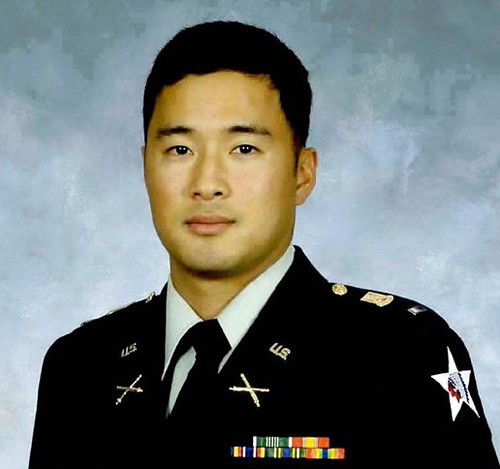
In Friday's snapshot, we noted Lt Ehren Watada.
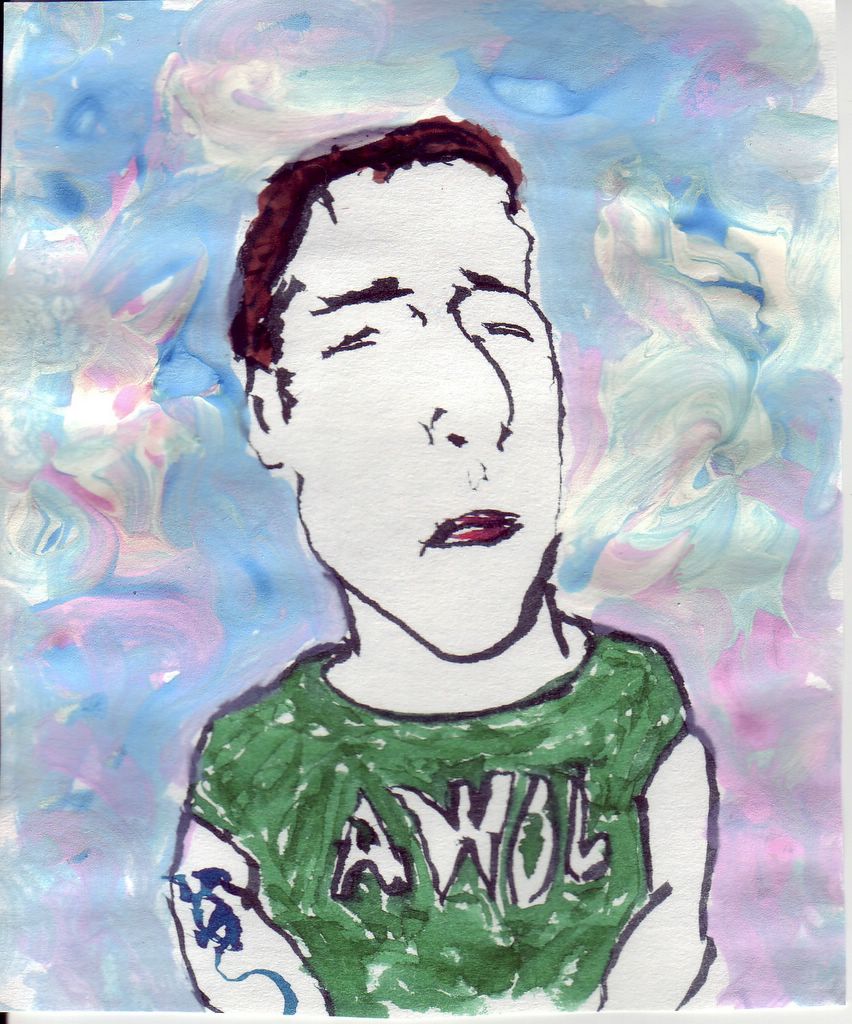
There is also Ivan Brobeck.
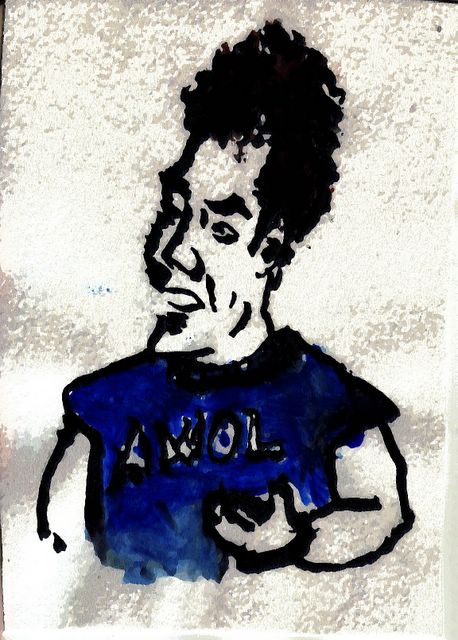
There is Agustin Aguayo.

Darrell Anderson.
Kim Rivera.

Kyle Snyder.

And many others. They stood up and they deserve praise for that. We noted it in Friday's snapshot and a few new readers and/or drive-bys had never heard of some of the people mentioned. So there are some visuals. From Friday's snapshot:
Bradley's an Iraq War veteran. All week long, as Iraq's has gotten bits of attention from the Big Media and even the small, some veterans were ignored.
Lot of talk about being right. Lot of bragging and back patting.
But what most of us did wasn't all that. The Dixie Chicks? Yeah, a sacrifice followed that. But most of us could speak out without any great suffering.
Iraq War veteran Joshua Key?
Joshua Key served in Iraq. He returned to the United States and he couldn't go back. He couldn't return to the illegal war.
Kim Rivera served in Iraq. She returned to the United States and she couldn't go back. She couldn't return to the illegal war.
James Burmeister served in Iraq. He returned to the United States and he couldn't go back. He couldn't return to the illegal war.
Kyle Snyder served in Iraq. He returned to the United States and he couldn't go back. He couldn't return to the illegal war.
Darrell Anderson served in Iraq. He returned to the United States and he couldn't go back. He couldn't return to the illegal war.
Guess what?
Those are only a few of the names. All of the above went to Canada and sought asylum. Darrell and James came back to the US. Kim -- like Robin Long -- was forced out of Canada. Joshua and Kyle remain in Canada -- along with others including the first Iraq War resister to publicly attempt to be granted asylum in Canada: Jeremy Hinzman.
Where is the outlet that will say that they were right?
They were right. And their actions helped awaken the country. Others who resisted and remained in the US like Kevin Benderman, Camilo Mejia and Stephen Funk were right too. Where's their pat on the back.
All of these people who showed the courage to say no to an illegal war helped awaken the country.
Lt. Ehren Watada is the only officer who publicly resisted going to the illegal war. So let's applaud his courage and drop back to the October 2, 2009 snapshot to remember his story:
He deserves applause. Ehren became a part of a movement of resistance within the military and let's note the names of others we have covered: Dean Walcott, Linjamin Mull, Justin Colby, Camilo Mejia, Robert Zabala, Darrell Anderson, Kyle Snyder , Corey Glass, Jeremy Hinzman, Joshua Key, Ricky Clousing, Mark Wilkerson, Agustin Aguayo, Camilo Mejia, Patrick Hart, Ivan Brobeck, Aidan Delgado, Pablo Paredes, Carl Webb, Jeremy Hinzman, Stephen Funk, David Sanders, Dan Felushko, Brandon Hughey, Clifford Cornell, Joshua Despain, Katherine Jashinski, Chris Teske, Matt Lowell, Jimmy Massey, Tim Richard, Hart Viges, Michael Blake, Brad McCall, Rodney Watson, Chuck Wiley and Kevin Benderman.
War resisters were public and they were underground. Those who went public shared important details of how they came to see the Iraq War as illegal.
Mark Larabee's "Soldiers still go over the hill even in an all-volunteer Army" (The Oregonian) was the first to tell James Burmeister's story and, in doing so, broke the news of the kill teams (broke the news domestically) July 16, 2007. Dee Knight's "Army court-martials resister for blowing whistle on 'bait-and-kill'" (Workers World) detailed what Burmeister experienced as well:
Private First Class James Burmeister faces a Special Court Martial at Fort Knox on July 16. The charges are AWOL and desertion. He returned to Fort Knox voluntarily in March, after living 10 months in Canada with his spouse and infant child. He refused redeployment to Iraq while on leave in May 2007.
In most such cases at Fort Knox, the Army has in recent years quietly dismissed the resister with a less than honorable discharge "for the good of the military." This time it's different. The brass "offered" Burmeister a year in military prison and a dishonorable discharge if he agreed to plead guilty.
Burmeister refused the offer. His father, Erich, says the Army is making an example of James for denouncing a secret "bait-and-switch" program he was forced to participate in while in Iraq. In media interviews last year in Canada, James described the program as a war crime he was forced to commit. Shortly afterward, the program's details came out in the Washington Post.
"Baiting is putting an object out there that we know they will use, with the intention of destroying the enemy," the Post quoted Capt. Matthew Didier, leader of an elite sniper scout platoon. "We would put an item out there and watch it. If someone found the item, picked it up and attempted to leave with the item, we would engage the individual."
The Post reported that "Eugene Fidell, president of the National Institute of Military Justice, said such a baiting program ... raises troubling possibilities, such as what happens when civilians pick up the items. ... 'You might as well ask every Iraqi to walk around with a target on his back,' Fidell said." (Sept. 24, 2007)
James had asked to be classified as a conscientious objector following his training in Germany, but his request was ignored by his commander. Instead, he became a machine gunner. "Our unit’s job seemed to be more about targeting a largely innocent civilian population or deliberately attracting confrontation," he wrote in his deposition seeking asylum in Canada. "These citizens were almost always unarmed. In some cases the Iraqi victims looked to me like they were children." (Eugene Weekly, May 22)
In Iraq, Burmeister had been knocked unconscious and his face filled with shrapnel when his Humvee was hit by a roadside bomb. The shrapnel wounds left him with a traumatic brain injury, and he suffers from severe Post-Traumatic Stress Disorder. His parents insist that he urgently needs medical and psychological help, not jail time.
His parents have waged an unceasing struggle for the Army to release him. They called on their representative, Peter DeFazio, to launch a congressional inquiry into James’s case, but have so far heard nothing. James' mother, Helen Burmeister, flew to Fort Knox in June, with help from anti-war ex-Colonel Ann Wright. Helen spoke directly to the base commander there, demanding that her son be discharged in lieu of a court martial. She then joined supporters from Veterans for Peace and Vietnam Vets Against the War demonstrating outside.
People who stood up -- publicly like the above or privately -- in the military deserve a round of applause, deserve some praise. The Iraq War wasn't a "dumb" war, the term is "illegal."
iraq
There is also Ivan Brobeck.
There is Agustin Aguayo.
Darrell Anderson.
Kim Rivera.
Kyle Snyder.
And many others. They stood up and they deserve praise for that. We noted it in Friday's snapshot and a few new readers and/or drive-bys had never heard of some of the people mentioned. So there are some visuals. From Friday's snapshot:
Bradley's an Iraq War veteran. All week long, as Iraq's has gotten bits of attention from the Big Media and even the small, some veterans were ignored.
Lot of talk about being right. Lot of bragging and back patting.
But what most of us did wasn't all that. The Dixie Chicks? Yeah, a sacrifice followed that. But most of us could speak out without any great suffering.
Iraq War veteran Joshua Key?
Joshua Key served in Iraq. He returned to the United States and he couldn't go back. He couldn't return to the illegal war.
Kim Rivera served in Iraq. She returned to the United States and she couldn't go back. She couldn't return to the illegal war.
James Burmeister served in Iraq. He returned to the United States and he couldn't go back. He couldn't return to the illegal war.
Kyle Snyder served in Iraq. He returned to the United States and he couldn't go back. He couldn't return to the illegal war.
Darrell Anderson served in Iraq. He returned to the United States and he couldn't go back. He couldn't return to the illegal war.
Guess what?
Those are only a few of the names. All of the above went to Canada and sought asylum. Darrell and James came back to the US. Kim -- like Robin Long -- was forced out of Canada. Joshua and Kyle remain in Canada -- along with others including the first Iraq War resister to publicly attempt to be granted asylum in Canada: Jeremy Hinzman.
Where is the outlet that will say that they were right?
They were right. And their actions helped awaken the country. Others who resisted and remained in the US like Kevin Benderman, Camilo Mejia and Stephen Funk were right too. Where's their pat on the back.
All of these people who showed the courage to say no to an illegal war helped awaken the country.
Lt. Ehren Watada is the only officer who publicly resisted going to the illegal war. So let's applaud his courage and drop back to the October 2, 2009 snapshot to remember his story:
This afternoon Fort Lewis's Media Relations department announced
that Ehren Watada had completed his out processing and was discharged
from the US military. We're going to stay with this topic for a bit
because (a) it is important and (b) it is historical. 1st Lt Watada was
the first officer to publicly refuse to deploy to Iraq. As Ann noted last night,
"there are people who have no idea what a brave thing he did." Ehren
Watada was informed he would be deploying to Iraq in June 2005. He had
not given much thought to Iraq. To prepare for the deployment, his
superior advised him to study up on the war so that he could answer any
questions that might come up from those serving under him. He started
researching the basics about the country itself, topography and
geography and continuing through the history up to the current war. He
came across the Downing Street Memos which exposed that the
'intelligence' for the Iraq War was fixed. He was now firmly convinced
that the Iraq War was illegal and immoral. From eager to serve in Iraq
to realizing he'd be violating his oath to the Constitution, Ehren was
now confronted with a decision. He could keep his mouth shut and just
do as he was told. Or he could take a stand which would risk the wrath
of the military as well as a portion of the public.
Ehren's mother, Carolyn Ho, has explained what happened next many times as she's spoken to raise awareness of her son's case. WBAI's Law and Disorder
shared one of her talks on their January 22, 2007 broadcast. Carolyn Ho
explained it was the new year, January 2006, and her son called her.
He explained that he had something to tell her, he'd decided decided he
wouldn't deploy to Iraq when the time came. She was very upset and
asked him if he understood what might result from his decision? Ehren
told her that he had no choide, he'd taken an oath to the Constitution,
this was what he had to do and he was going to inform his superiors.
Ehren
didn't hesitate to inform his superiors. This was in January 2006.
They at first attempted to change his mind. He could not be budged. So
they stated they wanted to work something out. They brainstormed
together. Ehren came up with ideas including, he could deploy to the
Afghanistan War instead, he could resign (his service contract expired
in December 2006). His superiors appeared to be eager to consider every
possibility; however, they were just attempting to stall. They appear
to have thought that if they put him off and put him off, when the day
to deploy came, he'd just shrug his shoulders and deploy.
They
did not know Ehren. June 7, 2006 ("the day before his 28th birthday,"
Carolyn Ho likes to remind), Ehren went public with his refusal to
deploy. Jake Armstrong (Pasadena Weekly) notes Ehren stated to
participate in the Iraq War would be participating in war crimes.
In August 2006, an Article 32 hearing was held. Watada's defense called three witnesses, Francis A. Boyle of the University of Illinois' College of Law, Champagne; Denis Halliday, the former Assistant Secretary General of the UN; and retired Colonel Ann Wright.
These three witnesses addressed the issue of the war, it's legality,
and the responsibilities of a service member to disobey any order that
they believed was unlawful. The testimony was necessary because Watada's
refusing to participate in the illegal war due to the fact that he
feels it is (a) illegal and (b) immoral. Many weeks and weeks later, the
finding was released: the military would proceed with a court-martial.
On Monday, February 5, 2007, Watada's court-martial began. It continued on Tuesday when the prosecution argued their case. Wednesday,
Watada was to take the stand in his semi-defense. Judge Toilet (John
Head) presided and when the prosecution was losing, Toilet decided to
flush the lost by declaring a mistrial over defense objection in his
attempt to give the prosecution a do-over. Head was insisting then that a court-martial would begin against Watada in a few weeks when no court-martial could begin.
January 4, 2007,
Head oversaw a pre-trial hearing. Head also oversaw a stipulation that
the prosecution prepared and Watada signed. Head waived the stipulation
through. Then the court-martial begins and Ehren's clearly winning. The
prosecution's own military witnesses are becoming a problem for the
prosecution. It's Wednesday and Watada's finally going to take the
stand. Head suddenly starts insisting there's a problem with the
stipulation. Watada states he has no problem with it. Well the
prosecution has a problem with it and may move to a mistrial, Judge Toilet declares.
The
prosecution prepared the stipulation and they're confused by Head's
actions but state they're not calling for a mistrial or lodging an
objection. That's on the record. Head then keeps pushing for a mistrial
and the prosecution finally gets that Head is attempting to give them a
do-over, at which point, they call for a mistrial.
The case has
already started. Witnesses have been heard from. Double-jeopardy has
attached. The defense isn't calling for a mistrial and Head rules a
mistrial over defense objection and attempts to immediately schedule a
new trial. Bob Chapman (Global Research) observes,
"With little fanfare the Army at Fort Lewis, Wash., accepted the
resignation of the 1966 Kalari High School graduate, and he will be
discharged the first week in October."
He deserves applause. Ehren became a part of a movement of resistance within the military and let's note the names of others we have covered: Dean Walcott, Linjamin Mull, Justin Colby, Camilo Mejia, Robert Zabala, Darrell Anderson, Kyle Snyder , Corey Glass, Jeremy Hinzman, Joshua Key, Ricky Clousing, Mark Wilkerson, Agustin Aguayo, Camilo Mejia, Patrick Hart, Ivan Brobeck, Aidan Delgado, Pablo Paredes, Carl Webb, Jeremy Hinzman, Stephen Funk, David Sanders, Dan Felushko, Brandon Hughey, Clifford Cornell, Joshua Despain, Katherine Jashinski, Chris Teske, Matt Lowell, Jimmy Massey, Tim Richard, Hart Viges, Michael Blake, Brad McCall, Rodney Watson, Chuck Wiley and Kevin Benderman.
War resisters were public and they were underground. Those who went public shared important details of how they came to see the Iraq War as illegal.
Mark Larabee's "Soldiers still go over the hill even in an all-volunteer Army" (The Oregonian) was the first to tell James Burmeister's story and, in doing so, broke the news of the kill teams (broke the news domestically) July 16, 2007. Dee Knight's "Army court-martials resister for blowing whistle on 'bait-and-kill'" (Workers World) detailed what Burmeister experienced as well:
Private First Class James Burmeister faces a Special Court Martial at Fort Knox on July 16. The charges are AWOL and desertion. He returned to Fort Knox voluntarily in March, after living 10 months in Canada with his spouse and infant child. He refused redeployment to Iraq while on leave in May 2007.
In most such cases at Fort Knox, the Army has in recent years quietly dismissed the resister with a less than honorable discharge "for the good of the military." This time it's different. The brass "offered" Burmeister a year in military prison and a dishonorable discharge if he agreed to plead guilty.
Burmeister refused the offer. His father, Erich, says the Army is making an example of James for denouncing a secret "bait-and-switch" program he was forced to participate in while in Iraq. In media interviews last year in Canada, James described the program as a war crime he was forced to commit. Shortly afterward, the program's details came out in the Washington Post.
"Baiting is putting an object out there that we know they will use, with the intention of destroying the enemy," the Post quoted Capt. Matthew Didier, leader of an elite sniper scout platoon. "We would put an item out there and watch it. If someone found the item, picked it up and attempted to leave with the item, we would engage the individual."
The Post reported that "Eugene Fidell, president of the National Institute of Military Justice, said such a baiting program ... raises troubling possibilities, such as what happens when civilians pick up the items. ... 'You might as well ask every Iraqi to walk around with a target on his back,' Fidell said." (Sept. 24, 2007)
James had asked to be classified as a conscientious objector following his training in Germany, but his request was ignored by his commander. Instead, he became a machine gunner. "Our unit’s job seemed to be more about targeting a largely innocent civilian population or deliberately attracting confrontation," he wrote in his deposition seeking asylum in Canada. "These citizens were almost always unarmed. In some cases the Iraqi victims looked to me like they were children." (Eugene Weekly, May 22)
In Iraq, Burmeister had been knocked unconscious and his face filled with shrapnel when his Humvee was hit by a roadside bomb. The shrapnel wounds left him with a traumatic brain injury, and he suffers from severe Post-Traumatic Stress Disorder. His parents insist that he urgently needs medical and psychological help, not jail time.
His parents have waged an unceasing struggle for the Army to release him. They called on their representative, Peter DeFazio, to launch a congressional inquiry into James’s case, but have so far heard nothing. James' mother, Helen Burmeister, flew to Fort Knox in June, with help from anti-war ex-Colonel Ann Wright. Helen spoke directly to the base commander there, demanding that her son be discharged in lieu of a court martial. She then joined supporters from Veterans for Peace and Vietnam Vets Against the War demonstrating outside.
People who stood up -- publicly like the above or privately -- in the military deserve a round of applause, deserve some praise. The Iraq War wasn't a "dumb" war, the term is "illegal."
iraq
Subscribe to:
Posts (Atom)