Tuesday, December 15, 2015. Chaos and violence continue, Barack Obama delivers a speech on his (military) approach to the Islamic State, Saudi Arabia and others band together to form a new coalition (of fighters), and more.
Monday, US President Barack Obama
gave a speech on the military approach he's leading against the Islamic State. From the speech, we'll note this:
This fall, even before the revolting attacks in Paris and San
Bernardino, I ordered new actions to intensify our war against ISIL.
These actions, including more firepower and Special Operations forces,
are well underway. This continues to be a difficult fight. As I said
before, ISIL is dug in, including in urban areas, and they hide behind
civilians, using defenseless men, women and children as human shields.
So even as we’re relentless, we have to be smart, targeting ISIL
surgically, with precision. At the same time, our partners on the
ground are rooting ISIL out, town by town, neighborhood by neighborhood,
block by block. That is what this campaign is doing.
We are hitting ISIL harder than ever. Coalition aircraft -- our
fighters, bombers and drones -- have been increasing the pace of
airstrikes -- nearly 9,000 as of today. Last month, in November, we
dropped more bombs on ISIL targets than any other month since this
campaign started.
We’re also taking out ISIL leaders, commanders and killers, one by one.
Since this spring, we’ve removed Abu Sayyaf, one of their top leaders;
Haji Mutazz, ISIL’s second-in command; Junaid Hussain, a top online
recruiter; Mohamed Emwazi, who brutally murdered Americans and others;
and in recent weeks, finance chief Abu Saleh; senior extortionist Abu
Maryam; and weapons trafficker Abu Rahman al-Tunisi. The list goes on.
We’re going after ISIL from their stronghold right down -- right in
downtown Raqqa, to Libya, where we took out Abu Nabil, the ISIL leader
there. The point is, ISIL leaders cannot hide. And our next message to
them is simple: You are next.
Every day, we destroy as well more of ISIL’s forces -- their fighting
positions, bunkers and staging areas; their heavy weapons, bomb-making
factories, compounds and training camps. In many places, ISIL has lost
its freedom of maneuver, because they know if they mass their forces, we
will wipe them out. In fact, since the summer, ISIL has not had a
single successful major offensive operation on the ground in either
Syria or Iraq. In recent weeks, we’ve unleashed a new wave of strikes
on their lifeline, their oil infrastructure, destroying hundreds of
their tanker trucks, wells and refineries. And we’re going to keep on
hammering those.
ISIL also continues to lose territory in Iraq. ISIL had already lost
across Kirkuk province and at Tikrit. More recently, ISIL lost at
Sinjar, losing a strategic highway. ISIL lost at Baiji, with its oil
refinery. We saw the daring raid supported by our Special Forces, which
rescued dozens of prisoners from ISIL, and in which Master Sergeant
Joshua Wheeler made the ultimate sacrifice.
So far, ISIL has lost about 40 percent of the populated areas it once
controlled in Iraq. And it will lose more. Iraqi forces are now
fighting their way deeper into Ramadi. They’re working to encircle
Fallujah and cut off ISIL supply routes into Mosul. Again, these are
urban areas where ISIL is entrenched. Our partners on the ground face a
very tough fight ahead, and we’re going to continue to back them up
with the support that they need to ultimately clear ISIL from Iraq.
One of the things that Barack's long advocated for was a regional force to combat the Islamic State -- Iraq and surrounding countries.
And, to a degree, that's now happened.
SPUTNIK reports, "Earlier in the day, Saudi Arabia announced the establishment of a
military alliance between 34 predominantly Muslim states to fight
terrorism. The joint operation's command center will be based in the
Saudi capital of Riyadh." Along with Barack, this sort of coalition has also been advocated by many members of US Congress -- Democrats and Republicans. And US Secretary of Defense Ash Carter has spoken in Congressional hearings about his belief that such a force is needed.
Most recently, he spoke of it in the December 9th Senate Armed Services Committee which we covered in the Wednesday, December 9th "
Iraq snapshot," "
Turkey's invasion and occupation of Iraq continues..." and in the Thursday, December 10th "
Iraq snapshot" while
Mike covered it in "
So now attack helicopters" and "
What is the plan?,"
Betty in "
Joe Manchin is a sad US Senator,"
Wally at
Rebecca's site with "
Who knew Ash Carter was a fan of The Killers?,"
Ava at
Trina's site with "
Those shameful senators,"
Ann with "
That posturing and preening Senate Armed Services Committee,"
Ruth with "
Senator Blumenthal misses the point,"
Kat with "
Disgusting 'answer' to the refugee crisis" and
Elaine with "
Senator Claire McCaskill is a pig." We'll note this exchange between Carter and Committee Chair John McCain.
Secretary Ash Carter: Uh, a couple of things, Mr. Chairman. First
of all, to your main point about, uh-uhm, more American forces -- and
I-I-I would say Special Forces but others as well that train, advise and
accompany -- they're not Special Forces, we are doing --
Chair John McCain: -- I was talking about a multi-national force.
Secretary Ash Carter: There, Mr. Chairman, I-uh-uh, as I indicated, I
too wish that particularly the Sunni Arab nations of the Gulf would do
more. And going way back --
Chair John McCain: They are willing to do so --
Secretary Ash Carter (Con't): -- to -- I've --
Chair John McCain (Con't): -- if there's a large commitment.
Secretary Ash Cater (Con't): -- I've had -- I've had lengthy conversations --
Chair John McCain: And so have I.
Secretary Ash Carter (Con't): -- with representatives there. Well
I-I-I-I have to say that, uhm, I have, uh, consistently emphasized to
them that they have a unique role here and, uh, also so far as they're
concerned about Iran which is another concern that they have -- by the
way, that we have also -- a totally different but, uh, serious subject
also. Uh, that, uh, what I've emphasized to them is that we don't like
it but the Iranians are in the game on the ground. And I very much
would like -- we would very much welcome -- we have repeatedly said this
-- working with those countries on the ground because we believe as you
noted that they, uh, would have a distinct advantage in a ground fight.
On this new force,
Saudi Arabi's official news agency, SAUDI PRESS AGENCY, issued the following:
|
|
|
Riyadh, Rabi'I 04, 1437, December 15, 2015, SPA -- A joint statement
on the formation of an Islamic military alliance to fight terrorism has
been issued. It reads as follows:
In the name of Allah, the Merciful,
Praise be to Allah and peace be upon Muhammad, the messenger of Allah,
Based on the Lord's guidance in the Holy Quran: (And cooperate in
righteousness and piety, but do not cooperate in sin and aggression),
and on the teachings of the Islamic Shari'a and provisions that reject
terrorism in all its forms and manifestations because it is a heinous
crime and injustice rejected by all heavenly religions and human
instinct.
Since terrorism and its atrocities - which
spread Shari'a-forbidden corruption and destruction in the world -
constitute a serious violation of human dignity and rights, especially
the right to life and the right to security, and subject the interests
of countries and communities to danger and threaten their stability; and
acts of corruption and terrorism cannot be justified in any way, and
hence it should be fought by all means and collaboration should be made
to eliminate it because this is cooperation in righteousness and piety,
Affirming the principles and objectives of the charter of the
Organization of Islamic Cooperation, which calls for member states to
cooperate to combat terrorism in all its forms and manifestations and
rejects all justifications and excuses for terrorism,
Achieving integration, closing ranks and uniting efforts to combat
terrorism, which violates the sanctity of people's lives, threatens
regional and international security and peace, poses a threat to the
vital interests of the nation and undermines coexistence in it,
Committed to the provisions contained in the United Nations'
Charter, the charter of the Organization of Islamic Cooperation and
other international conventions aimed at the eradication of terrorism,
Affirming the right of states to self-defense in accordance with the
purposes and principles of international law and the Charter of the
United Nations and on the basis of the provisions of the OIC Convention
on Combating Terrorism in all its forms and manifestations and the
elimination of its objectives and its causes,
Performing
the duty to protect the nation from the evils of all armed groups and
terrorist organizations - whatever their doctrine or title - which
spread killing and corruption in the world and are designed to terrorize
the innocent[.]
|
|
But before anyone could do a victory lap or take a bow, ALSUMARIA was reporting that the Chair of Iraq's Security and Defense Committee in Parliament, Hakim al-Zamili, was denouncing the new force and insisting that it did not represent Islam. al-Zamili is a member of the movement led by Shi'ite cleric Moqtada al-Sadr. Pakistan's NEWS INTERNATIONAL offers coverage of other countries not participating:
The list did not include Shia Muslim Iran, the arch-rival of Sunni
Saudi Arabia for influence across the Arab world. Tehran and Riyadh are
ranged on opposite sides in proxy conflicts in Syria and Yemen.
Notably absent from the list is Oman, a neighbour of Saudi Arabia. In
recent years, Oman has maintained a neutral role and has emerged as a
mediator in regional conflicts, serving as a conduit from the Gulf Arabs
to Iran.
Iraq and Syria, whose forces are battling to regain territory taken
by ISIL and whose governments are allied with Iran, are not in the
coalition.
While there was no time for a victory lap, there was time for a limited critique. Howard LaFranchi (CHRISTIAN SCIENCE MONITOR) weighs in with:
Yet as encouraging as the new coalition and the rhetoric
around it may sound, the effort may end up as little more than window
dressing. The announcement may be aimed at assuaging a world that after
the Paris and San Bernardino attacks is demanding action by Muslims
against the rising Islamist terrorist threat, some terrorism analysts
say.
“The Saudis are under a lot of pressure, for what
they’re doing in Yemen, from the accusations that they’re spreading
Wahhabi ideology, and for what they are not doing on the military side
of the US-led coalition to defeat ISIS in Syria and Iraq. So I can see
that this would have some propaganda value for them,” says Aaron David
Miller, a former US diplomat in Middle Eastern affairs who is now a vice
president at the Woodrow Wilson International Center in Washington.
That is one aspect to criticize.
Another one, a better one, might be that yet again the focus is on military.
That's not how you defeat the Islamic State.
Today, the US Defense Dept announced:
Strikes in Iraq
Fighter and bomber aircraft conducted eight strikes in Iraq, coordinated with and in support of the Iraqi government:
-- Near Huwayjah, a strike struck an ISIL vehicle bomb factory.
-- Near Ramadi, four strikes
struck an ISIL tactical unit, denied ISIL access to terrain, and
destroyed three ISIL light machine guns, an ISIL heavy machine gun, four
ISIL fighting positions, and an ISIL staging area.
-- Near Sinjar, three strikes
struck two separate ISIL tactical units, halted an ISIL vehicle’s
movement, and destroyed three ISIL fighting positions, an ISIL heavy
machine gun, and an ISIL light machine gun.
Task force officials define a
strike as one or more kinetic events that occur in roughly the same
geographic location to produce a single, sometimes cumulative, effect.
Therefore, officials explained, a single aircraft delivering a single
weapon against a lone ISIL vehicle is one strike, but so is multiple
aircraft delivering dozens of weapons against buildings, vehicles and
weapon systems in a compound, for example, having the cumulative effect
of making those targets harder or impossible for ISIL to use.
Accordingly, officials said, they do not report the number or type of
aircraft employed in a strike, the number of munitions dropped in each
strike, or the number of individual munition impact points against a
target.
These bombings have been going on since August 2014.
They have not defeated the Islamic State.
Nor can they.
You destroy the Islamic State by destroying that which gives it power and legitimacy.
Before the rise of the Islamic State in Iraq, there was the long persecution of the Sunnis.
Instead of addressing this, the White House has looked the other way, some argue, or encouraged it.
Ned Parker (REUTERS) has a major report
on abuses in Iraq carried out by Shi'ite militias and officials and the
US government's long role in concealing that abuse and looking the
other way:
The documents show how Washington, seeking to defeat Sunni jihadists
and stabilise Iraq, has consistently overlooked excesses by Shi’ite
militias sponsored by the Iraqi government. The administrations of
George W. Bush and Barack Obama have both worked with Badr and its
powerful leader, Hadi al-Amiri, whom many Sunnis continue to accuse of
human rights abuses.
Washington’s policy of expediency has
achieved some of its short-term aims. But in allowing the Shi’ite
militias to run amok against their Sunni foes, Washington has fueled the
Shia-Sunni sectarian divide that is tearing Iraq apart.
The
decade-old U.S. investigation of the secret prison implicates officials
and political groups in a wave of sectarian killings that helped ignite a
civil war. It also draws worrying parallels to the U.S. government’s
muted response today to alleged abuses committed in the name of fighting
Islamic State.
Those accused of running the secret prison or of
helping cover up its existence include the current head of the Iraqi
judiciary, Midhat Mahmoud, Transport Minister, Bayan Jabr, and a long
revered Badr commander popularly referred to as Engineer Ahmed.
There is no political solution in Iraq because the US government doesn't demand it.
This despite Barack declaring, June 19, 2014, that the only answer to Iraq's political crises was a political solution.
No efforts are made at diplomacy, no efforts are made to stop the persecution of the Sunnis.
And not only does the White House fail, so does the alleged peace movement.
A bunch of blowhards -- of any political party -- gather on stage and that's the big issue?
For CODESTINK it is.
At least, it is if the blowhards are Republicans.
The failure to protect the Sunni people isn't an issue for CODESTINK.
But they will whore and spin for the Democratic Party while pretending they're about peace.
They will distract from the very real problems to whore for a political party.
iraq
the christian science monitorhoward lafranchi
richard spencer
the telegraph of london
ned parker
 U.S. Dept of Defense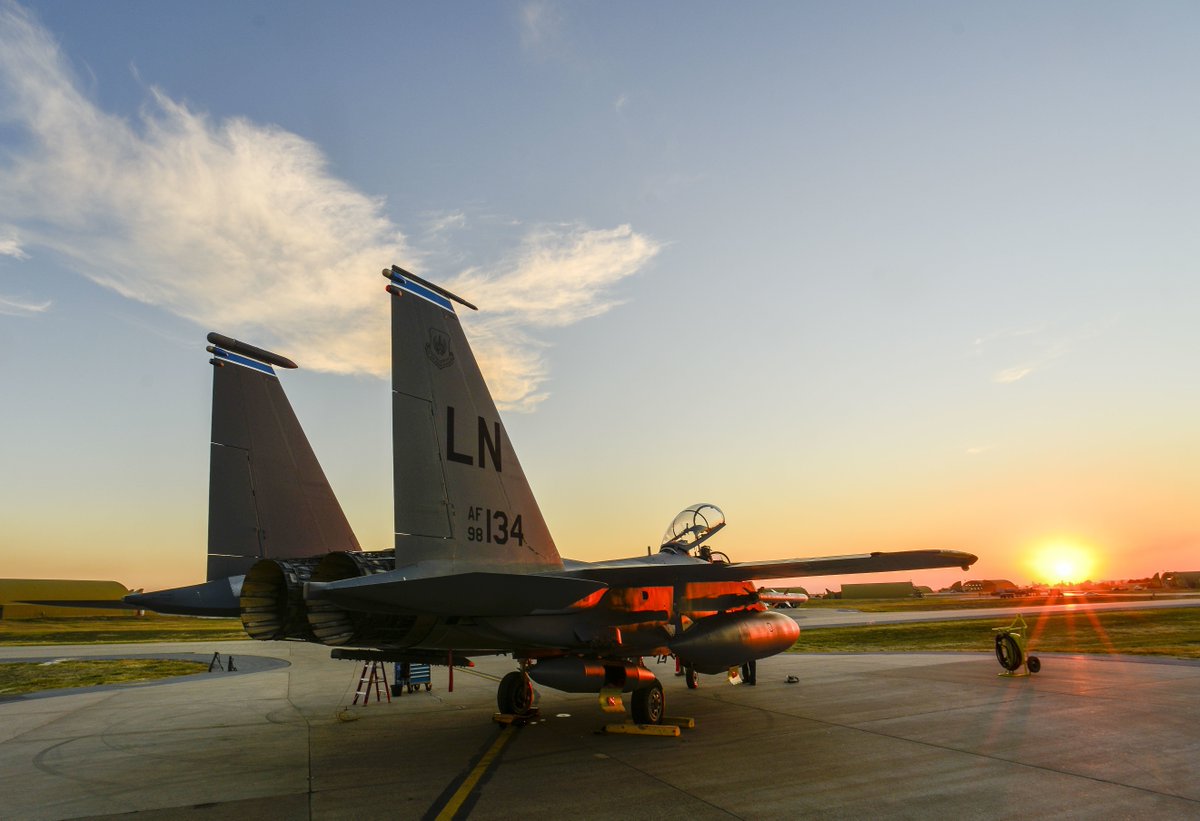
 Hassan Ridha


