Wednesday, June 10, 2015. Chaos and violence continue, the White House announces more US troops to Iraq, the plan or 'plan' remains the same (and continues to lack a longterm strategy), various people weigh in on Barack's decision, the State Dept continues to wish they could carry guns and
shoot-shoot bullets of fire while ignoring the diplomatic role they're supposed to be pursuing, nearly 300 violent deaths in Iraq today, and much more.
Yesterday's whispers and speculation were accurate, Barack's sending more into Iraq. Today, the White House issued the following announcement:
The White House
Office of the Press Secretary
For Immediate Release
June 10, 2015
Statement by the Press Secretary on Additional U.S. Steps in the Counter-ISIL Effort
In
furtherance of his comprehensive strategy to degrade and destroy the
ISIL terrorist group, President Obama has approved additional actions to
enhance the implementation of the counter-ISIL campaign.
To improve the capabilities and effectiveness of partners on the
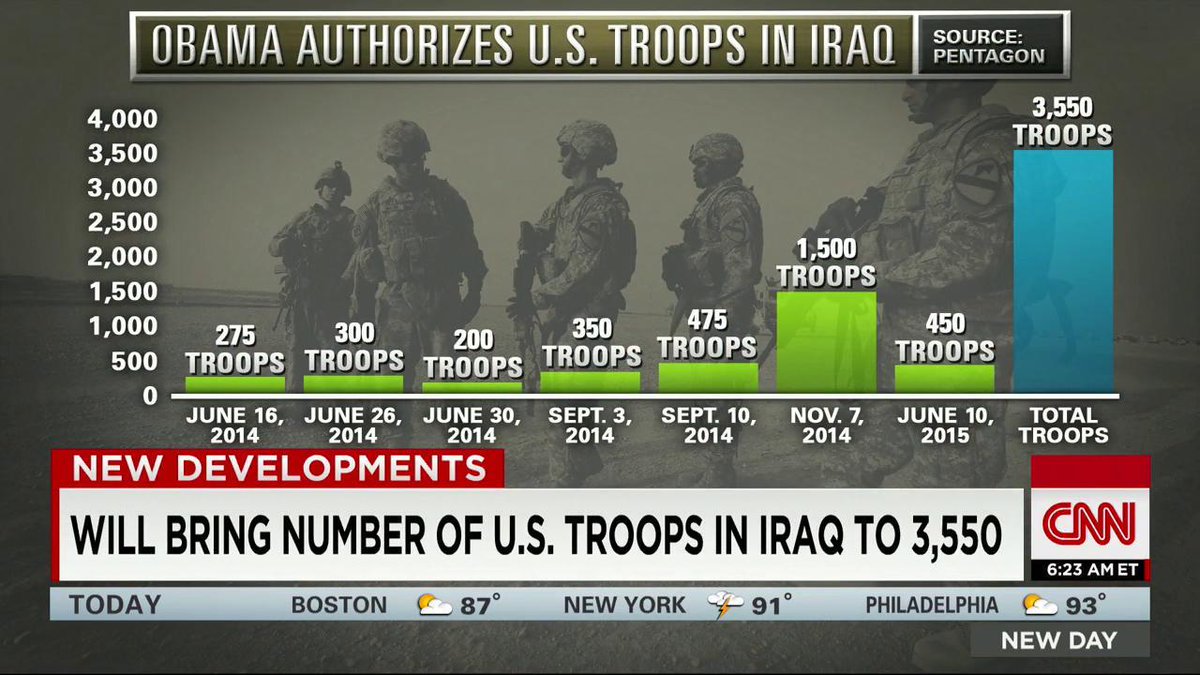
ground, the President authorized the deployment of up to 450 additional
U.S. military personnel to train, advise, and assist Iraqi Security
Forces at Taqaddum military base in eastern Anbar province. The
President made this decision after a request from Prime Minister Haider
Al-Abadi and upon the recommendation of Secretary Carter and Chairman
Dempsey, and with the unanimous support of his national security team.
These new advisors will work to build capacity of Iraqi forces,
including local tribal fighters, to improve their ability to plan, lead,
and conduct operations against ISIL in eastern Anbar under the command
of the Prime Minister. This effort will complement the efforts of U.S.
and coalition trainers at the four previously-established training sites
in Al-Asad, Besmaya, Erbil, and Taji, where over 9,000 Iraqi troops
have already been trained, with an additional 3,000 currently in
training. These additional U.S. troops will not serve in a combat role
and will augment the 3,100 U.S. troops who have already deployed to
Iraq.
This train, advise, and assist mission builds on lessons learned
during the past several months and is just one aspect of our commitment
to support the Iraqi Security Forces. Toward this end, the President has
also directed the expedited delivery of essential equipment and
materiel in coordination with the central government to Iraqi forces,
including Peshmerga and tribal fighters, operating under Iraqi command,
to ensure that our partners have the equipment needed to effectively
fight ISIL.
The President also approved a comprehensive approach to aid the
Iraqi government’s efforts to support the people and communities living
in areas newly liberated from ISIL. At the President’s direction, the
United States has been working closely with the Iraqi government, the
global counter-ISIL coalition, and the United Nations to develop a
holistic framework to help the Iraqi government provide sustained
security, services and assistance, and local governance among other key
support. The United States fully supports the development of an
international fund facilitated by the United Nations to help these
communities across Iraq recover.
More broadly, we will continue our efforts to leverage all
instruments of power to counter ISIL globally and most importantly, to
protect the US Homeland. Thousands of foreign fighters – including
Europeans and some Americans – have joined ISIL in Syria and Iraq. We
remain concerned that these trained fighters will return to their home
countries and carry out attacks and seek to inspire supporters to
conduct attacks at home, and the President directed his national
security team to intensify efforts with coalition partners to stem the
flow of foreign fighters to and from Iraq and Syria.
The President also reaffirmed U.S. support for the efforts of Prime
Minister Al-Abadi and other Iraqi leaders to build an inclusive and
effective governance structure within which all of Iraq’s diverse
communities feel that they have a say in determining the future of their
country. In this regard, the U.S. will fully support the plan endorsed
by the Council of Ministers on May 19 for the liberation of Anbar, as
well as the Iraqi Government’s priority of de-centralization to empower
local communities in line with the Iraqi Constitution. This “functional
federalism” effort being pursued by the Iraqi government is integral to
ensuring that ISIL – once defeated – can never again return to Iraqi
soil.
Kristin Donnelly, Alicia Jennings and Halimah Abdullah (NBC News) note, "The U.S. troops will not serve in a combat role and will augment the
more than 3,000 U.S. troops who have already deployed to Iraq, according
to administration officials. The first wave moving to the Taqaddum base
will be forces already in country on the ground, and then the
administration will pull additional forces from out of country to that
site."
Wolf Blitzner (CNN -- link is video) explained it this way, "President Obama is now planning to send another 450 US troops to Iraq after confessing just days ago that the US lacked a 'complete strategy' for fighting the terrorist group."
On All Things Considered (NPR -- link is audio and text), host Audie Cornish discussed Barack's move with NPR correspondent Tom Bowman:
CORNISH: There are these 450 U.S. military trainers. Is this actually
a change in U.S. strategy, or are we seeing more of the same?
BOWMAN: You know, it's really more of the same. The U.S. will now
have about 3,500 troops there. And we're seeing a bit of a change in
focus with these new troops - trying to get more Sunni tribal members to
fight alongside the army that is largely Shia and take on the so-called
Islamic State. Now, they'll be working out of a base not too far from
Ramadi. It's called Taqaddum, and it's also, interestingly, where the
Marines were stationed during the war. And, of course, Ramadi is a
provincial capital, as you said, that was seized by ISIS just a several
weeks ago.
Later in the broadcast, Cornish spoke with former US Ambassador to Iraq Ryan Crocker who stated, "I think the real significance of the announcement today is not in the
number of trainers. It's in the indication that the U.S. is thinking
seriously about this, is engaging, perhaps in a way we haven't so far.
So I hope there's more to follow. That would be the significance." US House Speaker John Boehner participated in a press conference today and was one of many weighing in on the announced action.
Martin Matishak (The Hill) quotes Boehner stating, "I support the tactical move the president's taking, but where's the
overarching strategy to deal with state -- the largest state sponsor of
terrorism in the region, Iran, and to deal with ISIL and all of their
related groups?"
The news prompted a
roundtable discussion on The NewsHour (PBS -- link is text and video) where co-anchor Judy Woodruff spoke with "former U.S. Defense Secretary and CIA Director Leon Panetta,
former commander in chief of U.S. Central Command, retired General
Anthony Zinni, former Undersecretary of Policy at the Department of
Defense Michele Flournoy, and retired U.S. Army Colonel Andrew Bacevich." Excerpt.
JUDY WOODRUFF: Andrew Bacevich, what about you? Is this the right thing to do right now?
COL. ANDREW BACEVICH (RET.),
Boston University: Well, I think it’s a very modest adjustment to the
existing policy. And the emphasis here is on very modest.
The
policy is based on the assumption that we have the capability to create
effective Iraqi forces. Now, when you think about it, we have been
trying to do that for 10 years now. We have not succeeded, and I’m a
little bit skeptical that the addition of 450 trainers is going to make
that much of a difference.
I’m sure that they will be able to
transfer some important skills to the people that they train, but will
they be able to transfer the will to fight, which would seem to be the
fundamental problem with the Iraqi forces that have basically been
taking a licking from ISIS?
JUDY WOODRUFF: General Zinni, what about you?
GEN. ANTHONY ZINNI (RET.),
Former Commander, U.S. Central Command: Well, I think it’s an
indication that we continue to underestimate the capability of ISIS, the
enemy, and overestimate the capabilities of the Iraqi military to deal
with this.
The strategy from the beginning has had several flaws, in my view.
One, it believes that time is on our side. It’s been a year now that
ISIS has occupied land inside Iraq and has basically not moved much, and
we haven’t been able to move them much. And, second, it depends on
some magical ground force that’s going to appear through some coalition
or the resurrection of an Iraqi military that’s effective.
That
hasn’t happened. Third, it’s based on an Iraqi government that is — to
follow what Andrew said, is going to create more in the hearts of the
Iraqi military to be willing to fight, and that hasn’t materialized
either.
So I think this is almost deja vu to Vietnam before we
committed the ground forces. We dribble in more and more advisers and
support. It’s not what’s in the hands of the soldiers. As Andrew said,
it’s what’s in their hearts, and that’s going to be the difference.
And I don’t think we can continue to let this thing just go on as it is.
JUDY WOODRUFF: Well, let me turn to Secretary Panetta.
Why
are not those concerns yours, Secretary Panetta? Why shouldn’t
Americans be concerned that, if the Iraqis don’t have the will to fight,
why should more U.S. trainers make a difference?
LEON PANETTA: This isn’t just about Iraq. This is about a threat to our national security.
If
ISIS is allowed to have a base of operations in Iraq, make no mistake
about it, their intentions are to use that as a base of attacking our
country and attacking our homeland. That’s why we have got to push the
Iraqis to make sure that the Sunnis do engage and that they’re armed,
and that the Kurds do the same.
JUDY WOODRUFF: Colonel Bacevich, though, you’re saying that you don’t think the Iraqis have that will.
COL. ANDREW J. BACEVICH: Well, more than that, with all due respect, I think Secretary Panetta is vastly exaggerating the threat posed by ISIS.
The
threat posed by ISIS to the United States of America is actually very,
very limited. We probably should be worrying more about drug lords in
Mexico, in terms of a direct threat to our safety. ISIS threatens the
stability of a region that we ourselves destabilized, as a result of our
own folly back in 2003. And that’s worth remembering, because we
therefore ought to be just a little bit humble about thinking some kind
of commitment of American military power directly or indirectly is going
to fix the problem.
The evidence is quite clear. U.S. military
intervention in this region creates greater instability, not stability.
If we want to somehow find a way to put the region back together again,
we need to look to someone else to assume the principal burden for
taking the fight to ISIS.
JUDY WOODRUFF: Well, let me turn to Michele Flournoy.
Why
isn’t he right, that the U.S. really is overestimating the strength of
ISIS; we should be more worried about what’s going on in our border to
the south than we are about this fighting forces thousands and thousands
of miles away?
MICHELE FLOURNOY: I think we need to look beyond the snapshot of ISIS today.
ISIS
is the new jihad — violent jihadist vanguard in the Middle East and
globally. They are displacing al-Qaida as the — sort of the group to
follow and the group to emulate. They are gaining ground in Libya.
They are gaining ground even in Afghanistan.
They, I think in the
next few years, if not stopped, will displace al-Qaida and be a global
network that will not only have objectives locally, but will have
transnational objectives. We already see thousands of foreign fighters
coming from Europe, primarily other states in the Gulf. Those fighters
will eventually return and be looking to carry out jihad in their home
countries.
But on this question of will to fight, I think the key
question is political. The Sunnis have been persecuted by a
Shia-dominated government in Iraq. They will fight if they believe that
there is a — they’re going to be treated differently in the end.
That’s what will create the will to fight on the part of the Sunni
population.
Again, many weighed in today. Among them,
BBC News' Jon Sopel shared this take on the decision:
After the fall of Ramadi and then the suggestion by the US defence
secretary that the Iraqis didn't have the will to fight, this
announcement is an admission that the strategy isn't working.
What
is striking is that these additional troops will be operating from a
military base in Anbar province, where Islamic State has made major
gains.
The aim is to bring Sunni tribes into the fight against IS
- they have so far refused to get involved out of their mistrust of the
Shia dominated government in Baghdad.
Involving them is now a key component of Pentagon strategy.
But
it will mean the US trainers will be operating close to IS front lines,
and that will present its own security concerns for the US, and an
opportunity for Islamic State.
Some attempts were made to provide context.
For example,
Bryan Bender, Nahal Toosi and Philip Ewing (POLITICO) offer, "President Barack Obama was elected on a promise of extricating the U.S.
military from Iraq -- what he called a 'clean break.' More than six years
later, he’s found there’s simply no escaping the pressure to send U.S.
combat forces back."
The War Without End.
It's not a new creation.
Nor is Barack the first failure in the Oval Office when it comes to ending a war.
It would be nice if reporters took the issue seriously and began pressing Barack for serious answers. Granted, he gives so few real press conferences. He's more likely to take a few questions at one of those photo op events after he meets with some foreign official, the people he calls on know they're going to be called on and they play their roles like actors not like journalists.
It was pioneering journalist and legend Nancy Dickerson who got serious with then-President Richard Nixon. Nancy Dickerson was the subject of the book
On Her Trail written by her son
John Dickerson who
continues to write for Slate and is the new moderator of
Face The Nation (CBS).
In January of 1971, two years into his first term as president, Nancy Dickerson brought up campaign words.
"Mr. President, speaking of your campaigns, you made the kickoff address in New Hampshire in 1968," Dickerson reminded. "You made a speech [about] how the next President had give this country the lift of a driving dream."
Nixon used that phrase repeatedly during the campaign -- his first successful one -- for the presidency.
"Well," Nancy Dickerson pointed out, "as yet, many people have failed to perceive the lift of a driving dream. I wondered if you could articulate that dream for us briefly and tell us how you plan to specifically get it across to the people in the next two years?"
"Miss Dickerson," Tricky Dick responded, "before we can really get a lift of a driving dream, we have to get rid of some of the nightmares we inherited. One of those nightmares is a war without end. We are ending that war."
We are?
"We" wouldn't.
The war Nixon 'inherited' wouldn't end during his first term.
Nor would it be ended by him.
He'd leave in disgrace during his second term, forced to resign to avoid criminal charges (the Watergate scandal). The war would wind down under his presidential replacement Gerald Ford.
Barack appears in no danger of impeachment but the Iraq War (he 'inherited') most likely won't end before he leaves office. Per his own words, the current phase will continue beyond January 2017 when the next US president is sworn in.
It's a shame there's no equivalent to Nancy Dickerson currently assigned to the White House beat.
Phyllis Bennis (IPS) explains:
Almost nine months after President Obama admitted that “we don’t have
a strategy yet” to challenge the Islamic State — and just days after he
said he still has “no complete Iraq strategy” — the non-strategy suddenly has a name: escalation.
[. . .]
The official reason is linked to the Islamic State’s recent seizure
of Ramadi, the capital of Anbar province and a key city only 70 or so
miles from Baghdad. (As Business Insider so nicely put it, Ramadi is closer to Baghdad than New York is to East Hampton.)
Obama and other top U.S. officials initially attempted to downplay
the significance of Ramadi, describing the inability of the Iraqi
military to defend it as simply a “tactical retreat.” But there’s no
question that the loss of the city, followed quickly by the Islamic
State’s seizure of the strategic Syrian city and ancient ruins of
Palmyra, reflected a serious consolidation of the group’s military
power.
Since then it’s been a rough few weeks for Obama’s war on ISIS.
On June 2, news broke that the Iraq military had managed to lose
2,300 armored Humvees, at least 40 M1A1 tanks, 74,000 machine guns, and
52 or more howitzers, mainly to the Islamic State. Weapons were
abandoned by fleeing troops, captured on the battlefield, and in some
cases likely sold to ISIS and other militias. In a Reuters article caustically titled “Dude, Where’s My Humvee?” Iraqi Prime Minister Haider al-Abadi admitted blithely, “we lost a lot of weapons.”
The Reuters writers were equally direct: “The United States
is effectively supplying the Islamic State with tools of war the
militant group cannot otherwise hope to acquire from its patrons.”
The above will allow as honest. The rest?
Phyllis is becoming a real embarrassment.
I don't have time to placate and/or shame her into truth telling the way
Elaine did a few years back when Phyllis was lying about the bodycount (Iraqi dead).
And I'm at the point where I'm probably going to start calling a whore a "whore."
Phyllis desire to lie and whore is destroying everything she ever stood for.
I hope when Barack's out of office and Phyllis grasps the tattered remains of her one formidable reputation to her naked body in the public square, she'll still feel propping up a War Hawk, lying for him, was worth it.
It is so damn amazing to me just how many Socialists in the US have gone out of their way to prop up a Democrat. What really is in it for them when they whore like this for a Democrat?
I don't enjoy Ezra Klein's whoring. But he's a Democrat whoring for a Democratic president so I can at least understand why he's chosen his occupation.
As a Democrat, I've always assumed Socialists (and Communists) were far more dedicated than I was and far more honest since they didn't have to self-check to make sure they weren't offering knee jerk defenses of their own when it came to politicians.
But if Barack's two terms in the White House have made anything clear, it's that Socialists will rush to whore for him even faster than Democrats. Certain Socialists. at any rate.
At
World Socialist Web Site, Tom Hall covered this group of unethicals last week with "
The Bernie Sanders campaign and the American pseudo-left." So it's no surprise that it's at
WSWS today where Bill Van Auken cuts through the nonsense and offers the real historical context:
The bellicose sentiments of the American ruling class found
expression in the testimony delivered to a US Congressional panel last
week by longtime Pentagon advisor Anthony Cordesman, of the Center for
Strategic and International Studies, a Washington DC think tank.
“The US needs to act upon a key lesson from Vietnam,” Cordesman told
Congress. “Generating or rebuilding forces in the rear is not enough,
and is an almost certain recipe for failure. New or weak forces need
forward deployed teams of advisors to help them actually fight.”
In other words, Iraqi government troops will fight only if they are
led by US “advisors” sent into combat with them. One would think that
the larger lesson of Vietnam is that such tactical remedies cannot
overcome the underlying problem of getting an indigenous force to fight
on behalf of a corrupt puppet regime imposed by US imperialism.
The second prescription provided by Cordesman is that the Pentagon
cast off its “restrictions on the use of airpower” and accept the “grim
realities of war.”
“The US cannot make avoiding all civilian casualties a strategic
objective,” he insisted, adding, “There is nothing humanitarian about
saving a small number of civilian lives and opening up whole towns and
cities to prolonged occupation by threats” such as ISIS.
Given that reports
compiled by independent journalists place the number of Iraqi and
Syrian civilians killed in the air strikes conducted by the US and its
allies at between 418 and 850, what Cordesman is advocating is a
Vietnam-style slaughter from the air. He speaks for influential layers
of the ruling establishment and the Pentagon that want a quick
resolution of the crisis in Iraq so that they can turn their attention
to the preparation of far more catastrophic wars against nuclear-armed
Russia and China.
Every day, at every White House press briefing, every State Dept press briefing, reporters should be asking, "Where's the political solution? What's the US government doing to help Iraq reach a political solution? June 19, 2014, the president said a political solution was Iraq's only hope so what's being done towards that?"
The Defense Dept can handle bombings all by itself. It doesn't need the State Dept but, for whatever reasons, the State Dept has confused itself with the Pentagon.
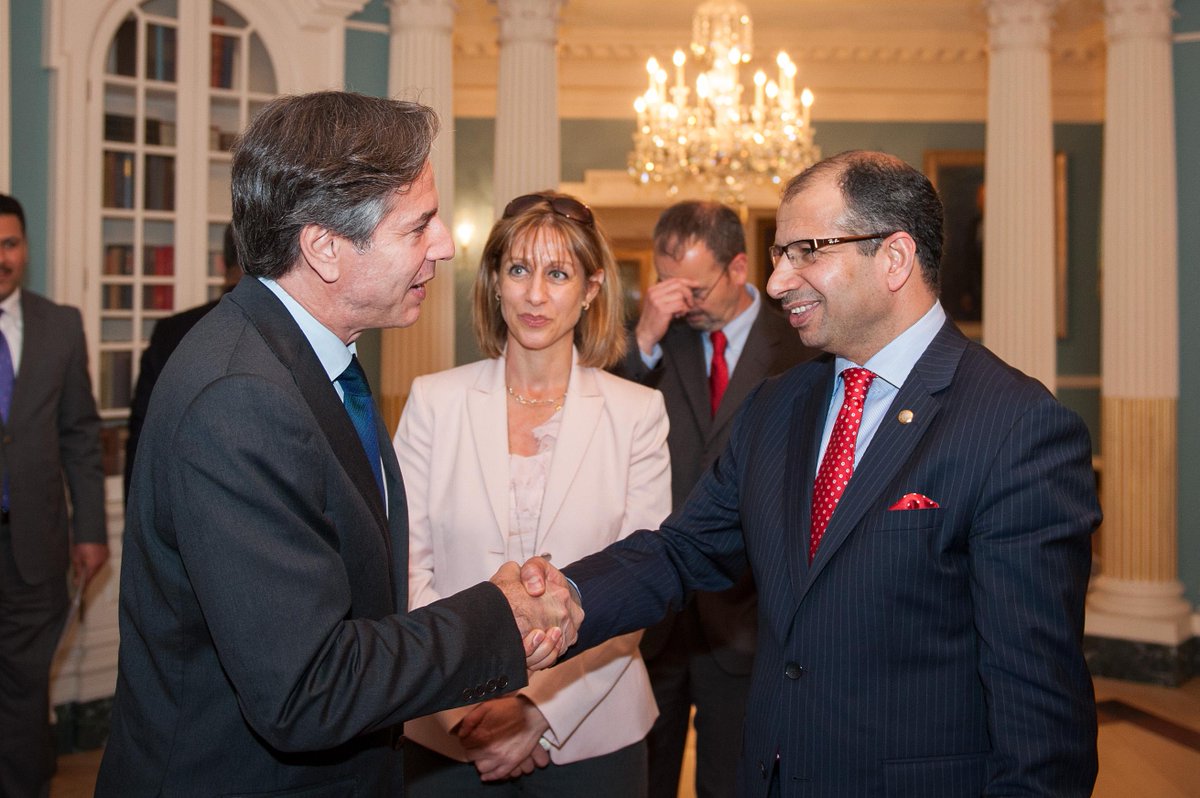
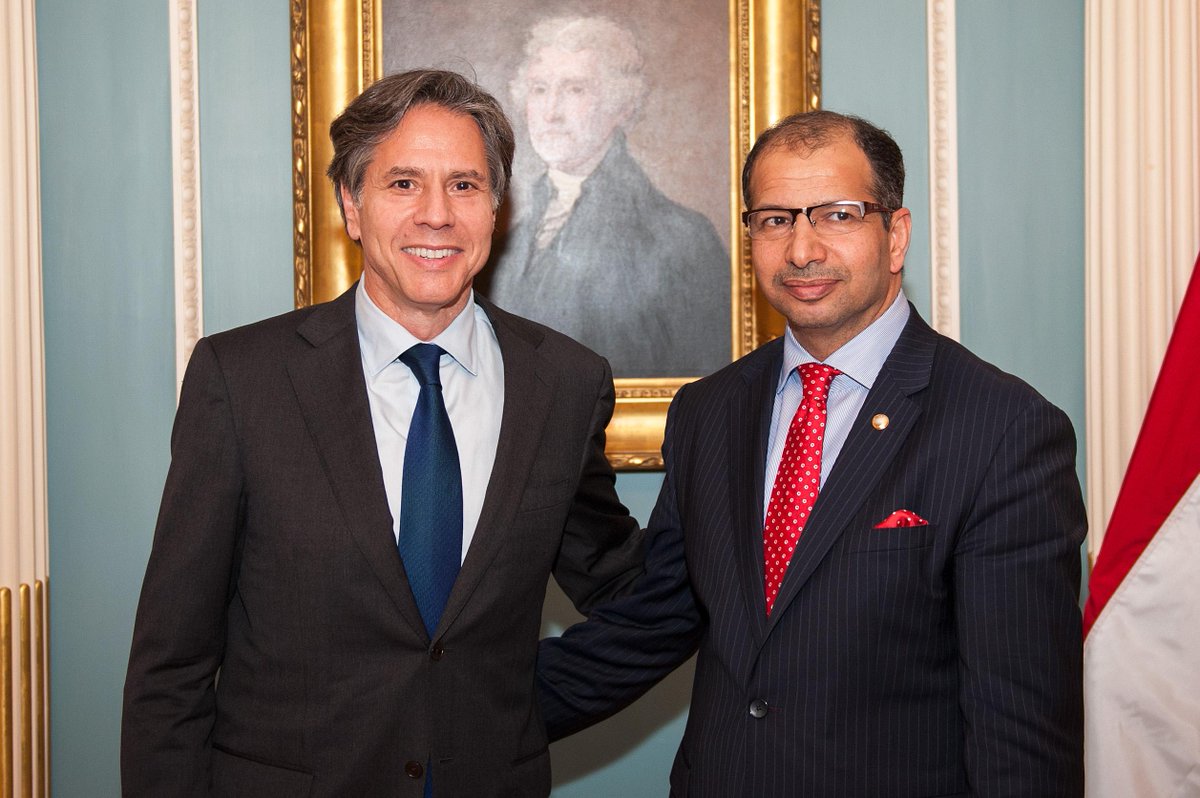
For example, the State Dept's Deputy Secretary Tweeted this:
So you've met with the Speaker of Iraq's Parliament?
Iraq's Parliament is unicameral.
That means there's only one house.
In the US, the Congress is bi-cameral and has the House of Representatives and the Senate. The United Kingdom has the House of Commons and the House of Lords in their legislative body.
But Iraq just has one house. So Salim al-Jabouri is basically Iraq's Speaker of the House and Senate Majority Leader rolled into one.
And this is who the State Dept's deputy speaker chose to talk military with?
Not to address the issues of unity and reconciliation?
Or issues that the Parliament hasn't voted on (such as the national guard -- there's a military issue big boy Antony could have grabbed).
al-Jabouri is the highest ranking Sunni official in the Iraq government (the only possible equal would be Osama al-Nujaifi who serves as one of Iraq's three vice presidents and being one of three may reduce al-Nujaifi's power).
al-Jabouri comes to the US and it's not treated as a major event and a major opportunity to engage in diplomacy on issues related to national unity, reconciliation and much more?
But almost one year ago, Barack Obama stood before the American people and the world and proclaimed the only answer to Iraq's crises was a political solution?
This morning, we noted Amnesty International's report on the Yazidis carrying out revenge attacks -- the victims extracting vengeance. Part of the cycle of violence that will not stop without unity and reconciliation.
Margaret Griffis (Antiwar.com) notes 268 violent deaths across Iraq today -- but Barack sees no pressure to work on that political solution?
Lastly,
David Bacon's latest book is
The Right to Stay Home: How US Policy Drives Mexican Migration. This is from Bacon's "
ENFORCEMENT IS NOT THE ANSWER TO EUROPE'S MIGRANT CRISIS" (Al Jazeera America):
Every
day people launch themselves in rickety boats into the Mediterranean,
hoping to navigate the perilous passage to Europe -- hundreds drowning
in the attempt. In the last weekend of May alone, European naval and
merchant ships rescued more than 5,000 migrants after boats issued a
distress call, according the European Union border control agency,
Frontex. The death toll is on the rise. At least 1, 770 people have
died so far this year. The International Organization for Migration
(IOM) warns that the migrant death toll could reach 30,000 in 2015.
Others die in the sea off Southeast Asia, hoping to get to Australia, or
any country other than the one they left. Meanwhile, hundreds die
every year crossing the desert through northern Mexico into the United
States. Some perish from thirst and exposure, some fall from railroad
cars heading for the border, while dozens more are murdered simply
because they're vulnerable migrants.
Over the last two months, the migrant crisis in the Mediterranean has
captured the global spotlight. But so far the EU response has focused
on enforcement and a crackdown on traffickers. Recently some European
political leaders proposed using their navies to stop boats carrying
migrants, returning the refuge-seekers to their points of origin, mostly
in Libya, and then sinking the craft. This enforcement-based approach
not only ignores the primary drives of migration but also jeopardizes
millions of people who are seeking refuge from repressive regimes.
The governments of wealthy countries all use heavy enforcement against
migrants as a supposed deterrent to migration. Australia's navy seizes
boats on the high seas, and tows them to the isolated island nation of
Nauru. There it pays a private contractor $1.2 billion to keep migrants
in a detention center. The U.S. continues building privately-run
detention centers. The latest, the South Texas Detention Center,
already holds 2400 mothers and children from Central America.
International law guarantees the right to seek asylum. Seizing boats
and mass detentions are violations of this basic right, and endanger
migrants themselves. EU rules and standards require identifying
migrants and hosting them in adequate conditions. Asylum seekers' cases
must be assessed on an individual basis in the first country in which
they arrive. They must be allowed to reunite with family members who
are already living in EU countries.
iraq
npr
all things consideredtom bowman
bbc news
pbsthe newshourjudy woodruff
bill van auken
antiwar.com
margaret griffis
david bacon


 New Day